
Resources
7 Signs Your Grease Trap Needs Cleaning Now
Your grease trap rarely fails without warning. It sends signals — and every one of these means it's time to call before a warning becomes a shutdown.
1. Slow drains
The first and most common sign. When grease builds up in the trap and lines, sinks and floor drains start draining sluggishly — especially during rush.
2. Odors in the kitchen or dining room
Rancid grease has an unmistakable smell. If customers can smell your trap, it's badly overdue.
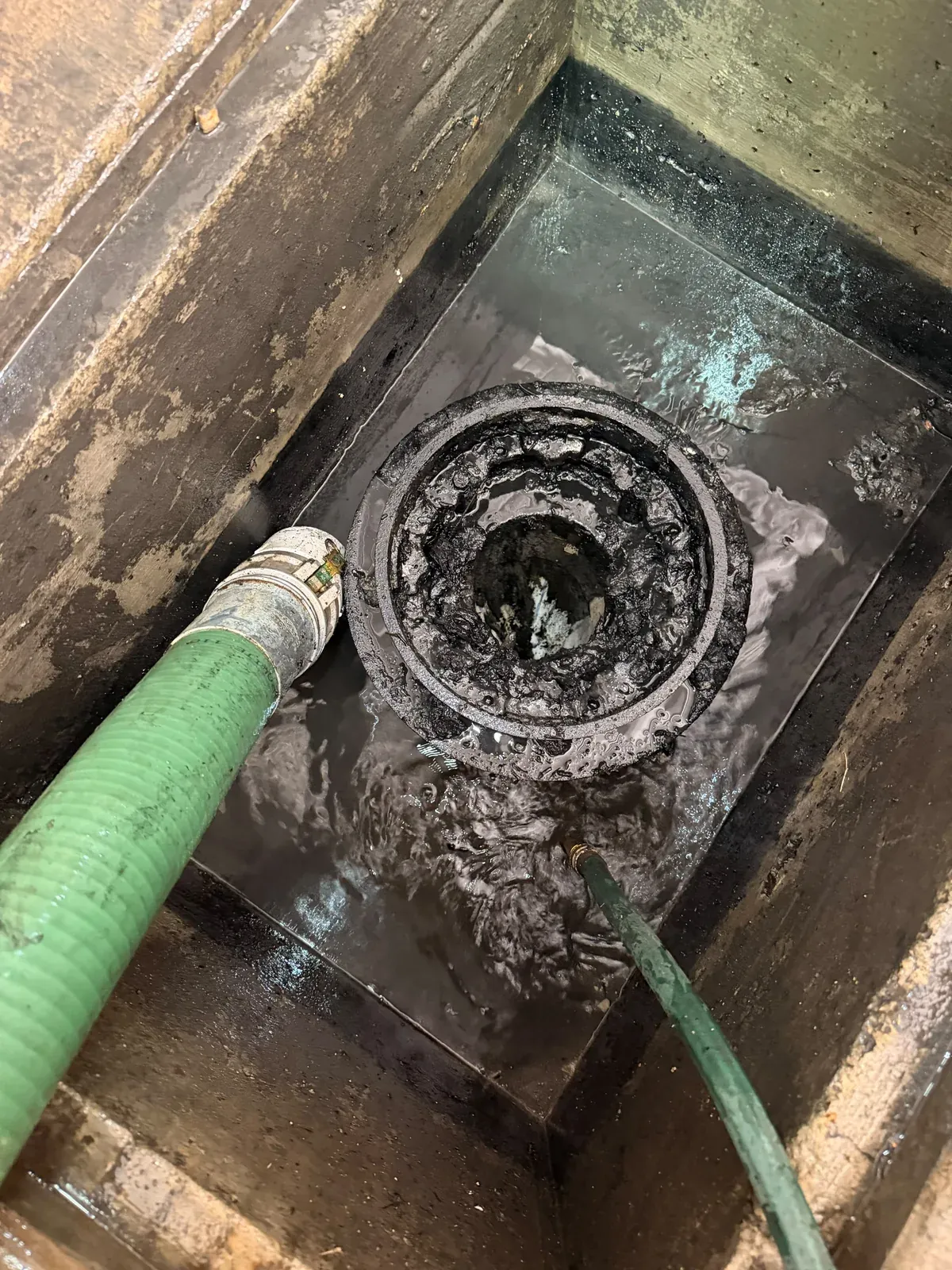
3. Grease visible in the trap or past the outlet
Lift the lid: if the grease cap is thick or you can see grease escaping at the outlet side, separation has stopped.
4. Backups — anywhere
Water coming up in floor drains or sinks means the system is choking. This is the last warning before an overflow.
5. It's been more than 90 days
Even slow kitchens accumulate FOG. If you can't remember your last service, you're past due by definition.
6. Grease around the lid or trap area
Overflow residue around lids and cleanouts means the trap has already exceeded capacity at least once.
7. A note from your inspector
If an inspection flagged your trap or your missing paperwork, the clock is already running.
Ignore them and you get:
Emergency shutdowns during service, sewage backups, health code violations, fines, and the emergency-rate service call you were trying to avoid. Routine cleaning costs a fraction of any one of those.